
In This Article
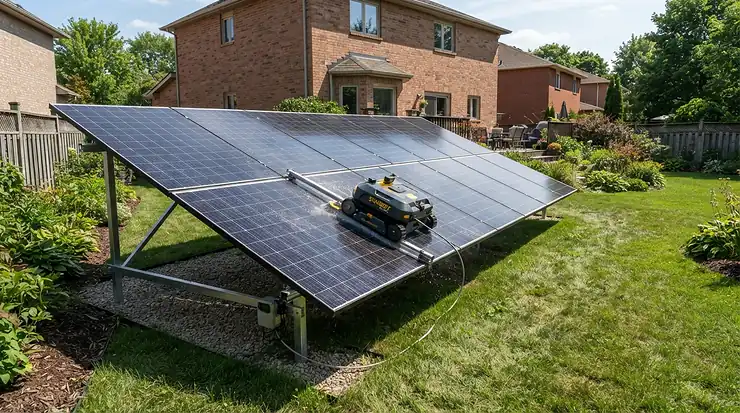
A window cleaning robot for solar panels and greenhouse glass is a suction-grip, self-propelled cleaner that crawls across flat glass while spraying and scrubbing with microfiber pads. Built for vertical windows, it can also handle smooth glass walls, sunroom panes and some sloped glazing, provided the surface, the tilt and the manufacturer’s rules all allow it.
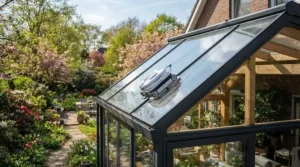
Here’s the part most product pages skip. Dirty glass is expensive glass. NREL researchers found that springtime tree pollen cut performance at North Carolina solar plants by as much as 15%, and ordinary rain did not wash it away. Greenhouses play by the same rules, only with plants on the line instead of kilowatt-hours. Less light in means less growth out.
So the temptation is obvious: grab a robot, set it on the glass, go make coffee. Sometimes that works beautifully. Sometimes it’s a bad idea with a charging cable. A suction robot is designed for vertical windows, not for a 30-degree roof array with a warranty attached, and those two worlds overlap less than the marketing implies.
This guide sorts the real from the wishful. You’ll get seven actual robots with specs translated into plain English, honest notes on where each one fails, and a straight answer on when a dedicated solar robot is the smarter buy. Every price below is a range, because Amazon prices move around constantly. Check current pricing before you commit.
Quick Comparison Table: 7 Robots at a Glance
| Product | Best For | Key Spec | Price Range | Non-Framed Glass Note |
|---|---|---|---|---|
| ECOVACS WINBOT W3 OMNI | Premium, low-fuss cleaning | Self-cleaning station, 130-min battery | Premium tier, check current price | Confirm listing wording |
| ECOVACS WINBOT W2 PRO OMNI | Best cordless value | 110-min battery station, 5500 Pa | $350-$450 range | Reviewed as frameless-capable |
| HOBOT-SP10 iScraper | Corners and outdoor glass | 6000 Pa, dual scrapers | $350-$400 range | Listing names frameless |
| HOBOT-2S | Streak-free routine cleaning | Ultrasonic mist spray | Around $300 | Verify before use |
| ECOVACS WINBOT MINI2 | Mirrors and small panes | Compact round body | $220-$260 range | Small panes only |
| Yoolax Window Cleaning Robot 2.0 | Square-corner coverage | Square pad | Around $300-$320 | Verify before use |
| AGORVIO Window Cleaning Robot | Tight budgets | About 3000 Pa, triple safety | Under $100 | Often not supported at this tier |
Looking at the table, the W2 PRO OMNI is the sweet spot if you want to cut the cord and still keep the price below flagship territory, while the HOBOT-SP10 iScraper earns its place for outdoor glass with awkward corners. Budget shoppers should note that the AGORVIO Window Cleaning Robot saves real money but gives up the edge-handling finesse that non-framed glass demands. Pick by your glass first and your wallet second.
💬 Just one click — help others make better buying decisions too!😊
Top 7 Picks: Window Cleaning Robot for Solar Panels and Greenhouse Glass, Analyzed
Every robot below is a window robot first. None is a rooftop solar machine, and I’ll say so plainly wherever it matters. One note on evidence: Amazon review counts shift daily, so the sentiment below comes from published reviewers and roundups rather than invented customer quotes.
1. ECOVACS WINBOT W3 OMNI — self-cleaning station, newest platform
The headline feature is the multifunction station that handles pad care for you, which matters more than it sounds when you’re cleaning grimy greenhouse panes weekly.
Published specs include WIN-SLAM 5.0 navigation, a 200 RPM TruEdge scrubbing system and a 130-minute battery. In practice, SLAM mapping means the robot plans a route instead of bouncing around, so you get fewer missed strips on tall glass walls. The long battery means a whole sunroom or greenhouse side wall without hunting for an outlet.
On paper this is the most complete system in the lineup. The catch, according to one comparison site, is that frameless support isn’t the defining wording in the flagship listing. If your glass is non-framed, read the listing and manual first.
Reviewer sentiment is strong: one 2026 roundup crowned it Editor’s Choice with a 4.3 rating. I couldn’t verify a trustworthy owner-review count, so treat that as tester opinion.
Pros:
- ✅ Self-cleaning station reduces pad fuss
- ✅ 130-minute battery for big glass areas
- ✅ Smarter SLAM route planning
Cons:
- ❌ Frameless wording less explicit than rivals
- ❌ Overkill for a few small panes
Price: premium tier, noticeably above the HOBOT listings. Check current price. Worth it for large, frequent jobs; wasteful otherwise.

2. ECOVACS WINBOT W2 PRO OMNI — best cordless value for big glass
This is the one that quietly does the most with the least drama, and the battery station is why.
The station delivers about 110 minutes of cleaning and roughly 55 square meters of coverage, so no extension cord snaking across your garden. Retailer listings put suction at up to 5500 Pa, with a heavy station (around 5.2 kg) acting as a safety anchor. Translation: it grips firmly and you can clean a glass wall without a power cord dangling.
My analysis of the spec sheet: the edge-cleaning mode is the quiet star. Dirty borders are where pollen and dust cement into a grey frame around every pane, and a robot that works the edge solves the part you’d otherwise do by hand. The minimum window size is about 30 by 40 cm, so tiny greenhouse vents are out.
A TechRadar reviewer described it working on regular and frameless glass and getting it “astonishingly clean.” Another reviewer flagged that the microfiber pads need frequent rinsing.
Pros:
- ✅ Cordless operation for roughly 110 minutes
- ✅ Edge cleaning mode for dirty borders
- ✅ Reviewed on both framed and frameless glass
Cons:
- ❌ Station adds bulk to carry and store
- ❌ Too big for tiny panes
Price: $350-$450 range. For most owners of a glass-heavy home, this is the best value verdict in the group.
3. HOBOT-SP10 iScraper — scraper-equipped for corners and outdoor glass
Instead of a plain wipe, the SP10 sprays, sweeps and then scrapes, which is a different philosophy from mop-style robots.
The listing describes 6000 Pa suction, dual glide scrapers and a 20-minute backup battery that keeps it stuck during a power cut. One roundup also lists a 7 to 100 degree tilt range. That figure is the one to verify with the seller, because it decides whether sloped greenhouse glass is realistic.
What the spec sheet won’t tell you: scrapers lift baked-on dust and pollen film better than a damp pad glides over it, but they need a clean-ish edge to work against. Reviewers note it’s corded and still leaves a thin border strip needing a quick manual swipe.
Its verified Amazon listing names framed and frameless glass plus indoor and outdoor use, an unusually explicit claim.
Pros:
- ✅ Scraper system tackles stubborn film
- ✅ Listing names frameless and outdoor use
- ✅ Strong corner and edge coverage
Cons:
- ❌ Corded, so you manage the cable
- ❌ Small border strip may need a manual wipe
Price: $350-$400 range. Excellent for outdoor-facing glass and corners.
4. HOBOT-2S — ultrasonic mist for streak-free routine cleaning
The unusual trick is an ultrasonic spray that atomizes water into a roughly 15-micron mist, wetting the glass more evenly than a jet.
Even wetting means fewer streaks and less residue, which matters on greenhouse glass where mineral deposits and haze steal light. The trade-off is suction around 2000 Pa or more, lower than the flagship Ecovacs units, so this is a routine-maintenance robot, not a heavy-grime rescue.
My take: it suits people who clean often and lightly. If your glass collects seasonal pollen film, weekly passes beat annual battles, and the HOBOT-2S is built for exactly that rhythm. For crusted-on bird mess, look higher.
Roundups credit it as the best ultrasonic-spray option and note it’s corded with a rope and backup power. Verified owner counts weren’t available, so check current listing reviews.
Pros:
- ✅ Even ultrasonic mist reduces streaks
- ✅ Rope and backup power for safety
- ✅ Lower price than flagship picks
Cons:
- ❌ Lower suction for heavy grime
- ❌ Corded operation limits reach
Price: around $300. A fair value for light, regular cleaning.
5. ECOVACS WINBOT MINI2 — compact helper for mirrors and small panes
Small, simple and easier to store than the big stations, the MINI2 is the “just do the sunroom door” robot.
One 2026 roundup lists it as corded, round and best for mirrors and small panes, with multi-level safety plus a rope. A solar-focused buyer’s guide was blunter: the MINI2 is better viewed as a glass-cleaning helper than a specialized outdoor solar washer. I agree with that framing.
Here’s what that means in practice. A round pad on a compact body cleans corners less completely, but it fits where larger robots can’t, such as cold-frame lids and glass doors. If your target is a handful of vertical panes, it’s a sensible, lower-cost way into the Ecovacs app ecosystem.
Reviewer sentiment centers on convenience for small jobs, not heavy-duty cleaning. I couldn’t verify detailed review data, so rely on the listing for specifics.
Pros:
- ✅ Compact body fits small panes
- ✅ Lower entry cost into the brand
- ✅ Safety rope plus multi-level protection
Cons:
- ❌ Not a solar panel specialist
- ❌ Round pad leaves corners less clean
Price: $220-$260 range. Good value only if your glass is small.
6. Yoolax Window Cleaning Robot 2.0 — square pad that reaches corners
A square pad is geometry doing real work: round robots leave a curved gap in every corner, and square ones nearly close it.
One roundup flagged it as the best in-stock square-pad alternative when the HOBOT corner specialist was sold out. That’s a useful signal about its role, though I could not verify a full spec sheet or a reliable review count, so confirm suction, tilt rating and frameless support on the listing before buying.
What does the square pad mean for you? On framed greenhouse panes divided by bars, corners are where algae film and dust settle first, and a square footprint reaches them with fewer passes. On non-framed glass, corner reach is less critical than edge detection, so verify that part separately.
Treat it as a corner-focused mid-range option rather than a proven all-rounder.
Pros:
- ✅ Square pad reaches into corners
- ✅ Positioned as an in-stock SP10 alternative
- ✅ Mid-range price for the geometry
Cons:
- ❌ Fewer verified specs than rivals
- ❌ Frameless support needs checking
Price: around $300-$320. Reasonable if corners are your pain point.
7. AGORVIO Window Cleaning Robot — cheapest way into the category
At roughly a quarter of the flagship cost, this is the entry ticket for glass you just want cleaner than it is now.
Roundups list about 3000 Pa suction, a triple safety setup with a rope, and an in/out glass pitch. Safety features matter because suction robots fail dramatically, not gradually. Even at this price, a backup battery and tether are non-negotiable.
Now the honest warning. Several budget window robots, including manuals for some HOBOT and Liectroux models, explicitly say not to use them on unframed glass. Edge detection at this tier often relies on a frame. For non-framed glass, check this model’s manual before it touches anything, and skip it if the instructions forbid it.
It’s a fine choice for framed greenhouse side walls and ordinary windows. I’d keep expectations modest on suction and edge finesse.
Pros:
- ✅ Very low price of entry
- ✅ Triple safety plus rope
- ✅ Works on indoor and outdoor glass
Cons:
- ❌ Basic edge handling
- ❌ Frameless use may be prohibited
Price: under $100. Great starter value for framed glass only.
Spec and Value Snapshot
| Product | Power Mode | Listed Suction | Safety | Price Range | Best For |
|---|---|---|---|---|---|
| ECOVACS WINBOT W3 OMNI | Cordless station | Not verified | Station system | Premium tier | Large, frequent jobs |
| ECOVACS WINBOT W2 PRO OMNI | Cordless station | Up to 5500 Pa | Heavy station anchor | $350-$450 | Cord-free big glass |
| HOBOT-SP10 iScraper | Corded | 6000 Pa | 20-min backup | $350-$400 | Corners, outdoor panes |
| HOBOT-2S | Corded | About 2000+ Pa | Rope plus backup | Around $300 | Light weekly cleaning |
| ECOVACS WINBOT MINI2 | Corded | Not verified | Multi-level plus rope | $220-$260 | Small panes |
| Yoolax Window Cleaning Robot 2.0 | Not verified | Not verified | Verify | $300-$320 | Corner coverage |
| AGORVIO Window Cleaning Robot | Corded | About 3000 Pa | Triple plus rope | Under $100 | Budget framed glass |
Two things stand out. First, higher suction doesn’t automatically mean better results on pollen film, because the scraper-equipped HOBOT-SP10 iScraper and the spray-focused HOBOT-2S attack the problem differently than the W2 PRO OMNI does. Second, the gap between the AGORVIO Window Cleaning Robot and the mid-range picks buys you edge intelligence and verified frameless support, not just brute grip. If your glass is framed, that gap may not be worth paying for.
Setup and First-Use Guide: Getting a Robot Onto Solar Glass and Greenhouse Panes Safely
A robot with a loose rope and a dirty pad is a disaster waiting to happen. This is the routine that keeps glass and gadgets alive.
Step 1: Dry-wipe grit first. Dust and sand trapped under a microfiber pad can scratch. A quick dry pass with a soft cloth removes the loose stuff before the robot spreads it around.
Step 2: Anchor the safety rope. Manuals for several models say to fasten the rope to a fixed indoor object before the robot touches the glass. Treat that as mandatory, not optional.
Step 3: Test suction on a dry pane. Place the robot, power on, and confirm it grips before it starts moving. A weak grip on a smooth, clean test pane means a worse grip on dirty glass.
Step 4: Skip rain and high humidity. One HOBOT manual warns against rainy or humid days because they leave white streaks. Moisture also hurts adhesion.
Step 5: Rinse pads after each session. Dirty pads smear. Many reviewers note pads need frequent cleaning.
Common mistakes in the first 30 days: forgetting to retrieve the robot by the rope, letting the power cord drape across its path, and running it on a pane too small for its footprint. Schedule your first heavy clean for the end of spring pollen season, then drop to light passes. Optimization trick: clean in the cooler parts of the day so water doesn’t flash-dry into spots.

Real-World Scenarios: Which Robot Fits Which Home or Greenhouse
Specs are abstractions. Here are three buyers.
The sunroom homeowner. A suburban family with a glass-walled sunroom, a patio door and a few large picture windows, cleaning monthly. Budget around $400. The ECOVACS WINBOT W2 PRO OMNI fits: cordless coverage, edge cleaning, frameless-capable. Corded budget bots would work, but cable management across big panes gets old fast.
The hobby greenhouse grower. An 8 by 12 foot aluminum-frame greenhouse with vertical side walls, cleaned seasonally. Budget around $100 to $300. Because panes are framed, the AGORVIO Window Cleaning Robot or the HOBOT-2S work for the walls. The roof is a different story, which I’ll cover below.
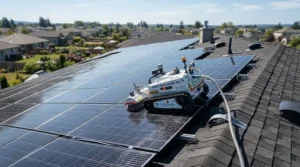
The solar owner with a roof array. Rooftop panels, tilted and warrantied, with a tempting robot in the cart. Honest answer: a window robot isn’t designed for this job, and reaching the roof to place it defeats the purpose. A dedicated solar robot, a water-fed pole or a professional service is the better match. If only the glass-faced carport or ground-level canopy is the target, the HOBOT-SP10 iScraper might fit, after you confirm tilt limits and warranty terms.
Notice the pattern: the right robot depends more on the glass than on the budget.
Problem and Solution Guide: 5 Cleaning Headaches, Fixed
Problem 1: Baked-on pollen film that won’t budge. NREL research notes dust can cement onto panels after dew cycles. On glass you can reach, use a scraper-style robot like the HOBOT-SP10 iScraper and soften the film first with a pre-soak.
Problem 2: Streaks after cleaning. Hard water and over-wet pads cause them. The ultrasonic mist on the HOBOT-2S helps, as does clean, damp-not-dripping pad prep.
Problem 3: Robot stalls at ridges. Greenhouse glazing bars and panel frames interrupt suction. Choose the smoothest pane sections and confirm your robot’s obstacle handling.
Problem 4: Power outage mid-clean. Most window robots carry roughly 20 to 30 minutes of backup power. Retrieve the robot by its rope immediately; don’t wait.
Problem 5: Dirty border strip. Even good robots miss the extreme edge. Edge-focused modes, like those on the ECOVACS WINBOT W2 PRO OMNI, reduce this, and a quick manual swipe finishes the job.
How to Choose a Window Cleaning Robot for Solar Panels and Greenhouse Glass
Short answer: match the robot to the glass type, slope, power access and safety needs. Here’s the order that saves money.
- Identify your glass type. Framed, non-framed or sloped decides everything else. Non-framed glass needs verified edge detection.
- Check the tilt rating. Suction robots are built for vertical glass. If your pane slopes, look for an explicit tilt range from the manufacturer.
- Match suction to your grime. Light pollen film needs less grip than baked-on dirt, but low suction can fail on tall panes.
- Decide cordless or corded. Cordless station models, like the ECOVACS WINBOT W2 PRO OMNI, free you from outlets; corded ones are cheaper but demand cable management.
- Insist on real safety. Backup battery, tether and edge sensors are baseline requirements, not extras.
- Check the pad system. Pads that wash easily or auto-clean save hours over a season.
- Read the manual before buying. Manufacturers often state exclusions, like unframed glass, in the manual rather than the headline.
Dust and Pollen Buildup: What It Actually Costs You
Dust and pollen buildup is sneaky because it’s gradual. Output or light drops a little each week, and you adapt without noticing.
For solar, the numbers are real. NREL’s soiling research puts annual energy lost to soiling anywhere from about 7% in parts of the United States to as high as 50% in the Middle East. The pollen study reported that unwashed panels lost roughly 10% of annual production despite rain, with peak-season losses reaching 15%.
Do the back-of-envelope math. Say a system produces 10,000 kWh a year and electricity is worth around 15 cents per kWh. A 10% loss is 1,000 kWh, or roughly $150 a year. Hypothetical numbers, but they show why people clean.
Greenhouses face the same physics. Research on greenhouse roofs reports that dirt can cut transmittance dramatically, and cleaning raised average roof transmittance from about 49% to 69% in one study on foil roofs. For growers, every percent of light counts.
What does a window robot do for dust and pollen buildup? It handles the glass you can reach, repeatedly and cheaply. It doesn’t magically solve the roof. That distinction drives the buying decision.
Waterproof Housing: What the Rating Really Means
Waterproof housing is the spec buyers assume and rarely verify. For window robots, it’s mostly absent.
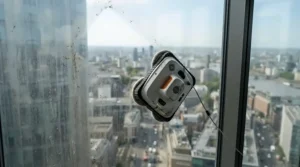
Window robots are designed to be used on sunny, dry days, with the robot and cable kept away from rain. One review roundup put it bluntly: don’t assume outdoor-use wording means weatherproof operation, and avoid unsafe weather. A HOBOT manual agrees, warning against rainy or humid days.
Dedicated solar robots tell a different story. Industrial units such as the Mamibot SolarWalker S2 list an IP65 rating, meaning dust-tight and protected against low-pressure water jets, because they live outdoors permanently.
Practical translation:
- Run window robots only in dry weather.
- Store them indoors, with pads rinsed and dried.
- Keep power connectors and adapters away from wet glass.
- In humid greenhouses, wait until condensation clears.
If your plan requires leaving a robot on a roof, waterproof housing isn’t a nice-to-have; it’s the whole ballgame. A window robot isn’t built for that life.
Non-Framed Glass: Which Robots Handle Edges Without Frames
Non-framed glass is where cheap robots fall off, literally. Most edge detection systems rely on sensing a frame or raised border. Remove it and the robot may roll right off.
Verified information is the rule here. The ECOVACS WINBOT W2 PRO OMNI is reported as handling frameless windows, and the HOBOT-SP10 iScraper lists framed and frameless glass in its verified Amazon listing. In contrast, manuals for some budget units, including a HOBOT-198 and a Liectroux model, say not to use them on unframed glass.
Other checks matter too. The W2 Omni specification calls for glass at least 3 mm thick and a minimum window of about 30 by 40 cm, with spray reaching no more than about 1 cm beyond the edge. Those numbers tell you what’s realistic.
Safety protocol for non-framed glass: always tether, always use backup power, and start with the robot well away from edges. Where greenhouse panes sit in bars, you’re dealing with framed glass; non-framed typically means glass doors, partitions and sunroom walls.
Glass Cleaning Robot for Greenhouse Roof Panels: What Actually Works
A glass cleaning robot for greenhouse roof panels sounds ideal, but roofs are where consumer window robots hit their limits.
Roofs slope, and glazing bars interrupt flat surfaces. Research on autonomous greenhouse roof cleaners shows purpose-built machines with brush, wiper and spray systems, designed for exactly that geometry. Another 2026 paper describing one such robot notes limits too: slow speed (about 0.35 m/s), battery life and cost.
So where do consumer window robots fit? Side walls, end walls, vertical vents and low-slope panes between bars. For sloped sections, only consider a robot with a stated tilt range, such as the HOBOT-SP10 iScraper (one roundup lists 7 to 100 degrees; verify with the seller), and test on a low section first.
One expert-level caution: growers have flagged that aggressive cleaning agents can damage anti-reflective coatings on greenhouse glass, and brushes can leave particles. Use mild cleaner and check your glass type. Cleaning gains are real. One solar-powered robot study reported light transmittance rising from 88% to 93%. For roofs beyond reach, a pro service or purpose-built equipment remains the sane option.
Automatic Solar Panel Cleaning Robot for Home Use: Window Robot vs Dedicated Solar Robot
An automatic solar panel cleaning robot for home use exists, but it’s a different animal from a window robot.
The Solarrow X3 is one example: a waterless, dry-brush autonomous robot weighing about 13 lb, positioned for roof-mounted systems and carports. A specialist retailer listed it around the $2,900 mark. Larger units like the Mamibot SolarWalker S2 run into five figures and target solar farms. Those are different leagues from a $350 window robot.
Warranty is the sleeper issue. NerdWallet’s cleaning guide advises checking your panel warranty for maintenance guidelines, and other sources warn that unapproved methods can void coverage. Call your installer before any robot touches a roof array.
| Option | Benefit | Trade-Off | Price Range | Best For |
|---|---|---|---|---|
| Window robot such as ECOVACS WINBOT W2 PRO OMNI | Cheap, easy, great on vertical glass | Not designed for tilted roof arrays | $90-$450 | Sunrooms, greenhouse walls |
| Dedicated home solar robot such as Solarrow X3 | Built for panels, waterless | Costly, roof placement still needed | Around $2,900 and up | Larger home arrays |
| Water-fed pole kit | Ground-level reach, low cost | Manual effort | $75-$460 range | Budget roof owners |
| Professional service | Warranty-aware, hands-off | Recurring cost, varies by region | Get local quotes | Hard-to-reach arrays |
The pattern is clear. If your goal is glass you can touch, a window robot like the HOBOT-SP10 iScraper wins on cost. If your goal is a roof array, the Solarrow X3 or a pole kit is the honest answer, and the window robot is the wrong tool wearing a convincing costume.

FAQ
❓ Can I use a window cleaning robot on solar panels without voiding my warranty?
❓ How often should greenhouse glass be cleaned?
❓ Do window cleaning robots scratch glass?
❓ What happens if the power goes out during cleaning?
❓ How much does an automatic solar panel cleaning robot for home use cost?
Conclusion
Let’s land the plane. A window cleaning robot for solar panels and greenhouse glass is genuinely useful, as long as you aim it at the right glass. Vertical panes, sunroom walls, greenhouse side panels and glass doors are its home turf. Rooftop arrays and sloped greenhouse roofs are where the marketing runs ahead of the engineering.
If you want one recommendation, the ECOVACS WINBOT W2 PRO OMNI is the best balance of cordless freedom, edge cleaning and frameless capability. For stubborn pollen film and outdoor corners, the HOBOT-SP10 iScraper is a smart alternate. The ECOVACS WINBOT W3 OMNI makes sense when the job is big and constant, the HOBOT-2S and Yoolax Window Cleaning Robot 2.0 cover mid-range routine cleaning, the ECOVACS WINBOT MINI2 handles small panes, and the AGORVIO Window Cleaning Robot is the starter option for framed glass only.
Before you buy anything, confirm three things: your glass type, the manufacturer’s tilt and frameless statements, and your solar warranty. Do that and you’ll spend less, clean more and avoid the expensive kind of surprise.
✨ Ready to clear the haze? 🔍 Pick the robot that matches your glass, click any highlighted product to check current pricing and availability, and give your panes, panels and plants the light they’ve been missing. 🌱☀️
Recommended for You
- Cordless Window Cleaning Robot for High-Rise Apartment: 7 Best (2026)
- Window Cleaning Robot for Seniors Who Can’t Climb Ladders: 7 Top 2026
- Window Cleaning Robot With Safety Rope for Skylights: 7 Best 2026
Disclaimer: This article contains affiliate links. As an Amazon Associate, I earn from qualifying purchases. If you purchase products through these links, we may earn a small commission at no additional cost to you.
✨ Found this helpful? Share it with your friends! 💬🤗
