

In This Article
Let’s start with the plain definition. A window cleaning robot for seniors who can’t climb ladders is a compact, suction-mounted machine that sticks to glass, scrubs it in a planned pattern, and can be started or steered with a handheld remote or a phone app. It does the reaching, stretching and balancing so the person doesn’t have to.

That matters more than it sounds. Ladders are a genuinely risky tool, and the risk climbs with age. A CDC analysis of occupational ladder fall injuries found that fatal ladder falls most often happened from just 6-10 feet, which is roughly the height of a squeegee job on a second-story window. Not a skyscraper. A stepladder.
So the real question isn’t “is a robot cleaner a gadget?” It’s “what’s the safest way to keep glass clear when climbing is off the table?” This guide answers that with seven real models, honest analysis of what their spec sheets mean in practice, and a frank look at where these machines still fall short. Prices below are ranges only, so check current price before you buy.
Quick Comparison Table: 7 Picks at a Glance
Here’s the short version before we dig in. Control style and safety backup matter most for seniors, so those are the columns that lead.
| Product | Control Style | Safety Backup | Price Range | Best For |
|---|---|---|---|---|
| Ecovacs Winbot W2S Pro Omni | App + station panel | 1 m rope, 12-tier protection, cordless station | Around $500-$600 | Upper floors and no outlet nearby |
| Ecovacs Winbot W2 Pro Omni | App (omnidirectional) + station panel | Reinforced rope, 12-stage protection | Around $400-$600 | Best all-round value |
| Ecovacs Winbot W1 Pro | App | Safety tether, backup battery | Roughly $200-$400 | Budget-conscious smartphone users |
| Hobot S7 Pro | Handheld remote + app | Edge-leakage bumper sensors | Mid-$400s | Large patio doors and big panes |
| Hobot 2S | Remote + smartphone | 20-minute emergency battery | Around $400-$550 | Simple, voice-guided operation |
| Mamibot W120-T | Remote, app and on-robot button | 4.5 m rope, 20-minute UPS battery | Around $200-$300 | Tight budgets with framed windows |
| MOVA N1 | Verify on listing | 12-level safety system | Check current price | Shoppers who want a newer alternative |
Looking at the table, the Ecovacs Winbot W2 Pro Omni offers the strongest balance of safety hardware and control flexibility without the premium tag of the Ecovacs Winbot W2S Pro Omni. Buyers who want a physical remote rather than a phone should weigh the Hobot S7 Pro and the Mamibot W120-T, which both ship with one. The MOVA N1 is the least documented option here, so treat it as a “verify before buying” candidate.
💬 Just one click — help others make better buying decisions too!😊
Top 7 Window Cleaning Robots for Seniors: Expert Analysis
Every pick below is analyzed through the lens of one question: how well does this machine keep an older person off ladders and out of risky positions? Review sentiment is summarized from published reviews and retailer feedback, never invented.
1. Ecovacs Winbot W2S Pro Omni — cordless station, no outlet hunting
The headline feature is a portable station with a built-in battery that powers the robot for up to 110 minutes without a wall socket. For a senior, that’s a quiet safety win: no extension cord snaking across a floor you have to walk around.
Launched in late summer 2026, the Ecovacs Winbot W2S Pro Omni pairs WIN-SLAM 4.0 route planning with a triple-nozzle spray, four corner scrubbers and a 1-meter backup rope, plus a 12-tier protection system. Suction is quoted at around 10,000Pa at launch. In practice, that means a firmer grip on glass and fewer worries about slipping on mildly damp panes.
Based on the spec comparison, this is the model for upper-floor homes where the nearest outlet is across the room. Because it’s brand new, review volume is thin. Early coverage, including a German PCWelt test, praises the manual steering from the app but notes the app’s translation feels unfinished. Reviewers of the closely related Ecovacs Winbot W2S Omni reported thorough corners and trouble-free runs on large glass and sliding doors.
Pros:
- ✅ Cordless station removes trailing power cables
- ✅ Four corner scrubbers reach tight edges
- ✅ 12-tier protection plus backup rope
Cons:
- ❌ Highest price in this roundup
- ❌ Very few long-term owner reviews so far
Expect to spend around $500-$600; launch discounts have appeared, so check current price. Worth it if cordless convenience is your priority.
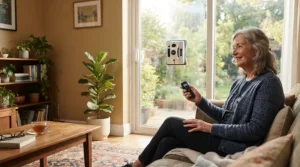
2. Ecovacs Winbot W2 Pro Omni — the value sweet spot with omnidirectional steering
Think of this as the model most people end up happy with. The Ecovacs Winbot W2 Pro Omni keeps the portable multi-function station, a rechargeable battery good for about 110 minutes, and a manual mode that lets you steer the robot in any direction from the app.
A reinforced three-layer safety rope is reported to support over 100 kg, a 20 kg improvement over earlier versions. Suction sits around 5,500Pa, and the minimum window size is 30 by 40 cm. What that means: it handles small bathroom panes and big living room glass alike, and the steering mode lets you “nudge” it onto a missed streak without touching a ladder.
Honest take? The station panel is the sleeper feature, because it lets you operate the machine without hunting through a phone. Reviewers of the Ecovacs Winbot W2 Omni sibling praised thorough cleaning and a multifunctional dock, while criticizing a barebones app and imperfect obstacle detection. Expect the same family traits here.
Pros:
- ✅ Station panel works without a smartphone
- ✅ Heavy-duty rope and 12-stage safeguards
- ✅ Omnidirectional manual steering
Cons:
- ❌ Edges are less thorough than the S-series upgrade
- ❌ App feels basic to some reviewers
Typically around $400-$600 depending on promotions. Strong value verdict.
3. Ecovacs Winbot W1 Pro — the entry ticket to ladder-free cleaning
If the first two feel like too much machine, the Ecovacs Winbot W1 Pro is where the family gets friendly. It’s corded, uses 2,800Pa suction, WIN-SLAM 3.0 path planning and a dual cross-spray system, and arrives with a safety tether and carabiner. A small backup battery keeps it clinging to glass for a short time if power drops.
The app does double duty: it launches fast, deep or spot cleaning, and works as a remote so you can drive the robot toward a particular smudge. For someone who can’t climb a stool, that spot-steering is the entire point.
The independent lab group CHOICE tested the Ecovacs Winbot W1 Pro and reported it cleaned grimy windows inside and out, leaving only faint patches after a deep clean. Their caveats are worth heeding: avoid gale-force winds and rain, and make sure the surface is flat and not greasy.
Pros:
- ✅ Lowest entry price in the Ecovacs line-up
- ✅ App steering for stubborn spots
- ✅ Safety tether and carabiner included
Cons:
- ❌ Requires a nearby outlet and cable
- ❌ Backup battery is short-lived
Frequent promotions have pushed it to roughly $200-$400. Good value for smartphone-comfortable users.
4. Hobot S7 Pro — a real handheld remote for big panes
Some people simply don’t want an app. The Hobot S7 Pro ships with a handheld remote, and that alone makes it a standout for this audience.
Two reciprocating cleaning pads move around 600 times a minute, and the 26 cm square body is designed to reach corners. Listings quote 4,800Pa suction and edge-leakage bumper sensors that react when air escapes at a frame or frameless edge. Translation: it should notice trouble before it drifts somewhere it shouldn’t.
TechRadar’s review found the Hobot S7 Pro left lightly soiled interior glass partitions clear, navigated accurately and didn’t miss spots, calling it a strong helper for big windows. One practical wrinkle: you hold it against the glass and switch it on manually, and the voice prompt is loud. For a senior with limited reach, that placement step is the part to plan around.
Pros:
- ✅ Physical remote, no smartphone needed
- ✅ Dual-pad scrubbing suits light maintenance
- ✅ Works on framed and frameless glass
Cons:
- ❌ Manual placement requires reaching
- ❌ Better for light soil than heavy grime
Mid-$400s is typical; check current price. Solid pick for large patio doors.
5. Hobot 2S — voice-guided and quietly reliable
Designed around simplicity, the Hobot 2S speaks to you. Voice prompts announce when cleaning is done, when to refill the tank and when to swap a pad, which helps anyone who doesn’t want to squint at a tiny screen.
It sprays through two patented ultrasonic nozzles, runs three modes, tops out around 62 dB, covers up to roughly 50 square meters, and needs windows of at least 40 by 40 cm. Retail listings mention both remote and smartphone control, plus an emergency battery that holds it on glass for about 20 minutes after a power cut. That’s your fall-prevention cushion: time to walk over and remove it safely.
On reviews, honestly, the picture is thin. Retailer pages show few ratings, and a comparison site frames it as a lower-cost alternative whose age means price, not features, should drive the choice. Consumer NZ also trialed it alongside two rivals, though the full verdict sits behind a membership wall.
Pros:
- ✅ Voice prompts guide every step
- ✅ Remote and smartphone control options
- ✅ 20-minute emergency battery
Cons:
- ❌ Older design than newer rivals
- ❌ Limited verifiable owner feedback
Roughly $400-$550 in retailer listings; US pricing varies. Buy it on a discount, not at full freight.

6. Mamibot W120-T — the budget workhorse with three control options
The Mamibot W120-T is the dark horse for tight budgets. At 1.35 kg and about 10 cm thick, it’s light enough to lift without strain, and you can run it three ways: remote control, app, or the button on the robot itself.
A 4.5 m safety rope and a 20-minute UPS battery handle the emergency scenarios, and a gyroscope helps it return to its starting point. That return-to-start habit means you collect the robot from roughly where you left it rather than chasing it across the glass.
Review sentiment is mixed in a useful way. Reviewers describe decent results on lightly dusty windows but weaker results when glass is heavily soiled, where the tracks clog with dust and the unit can slip. A comparison site also notes it struggles in corners. Importantly, framed windows are required here, so it’s a no for frameless glass.
Pros:
- ✅ Remote, app and button control
- ✅ Lightweight with long safety rope
- ✅ UPS battery for power cuts
Cons:
- ❌ Needs a frame, so no frameless glass
- ❌ Struggles with corners and heavy dirt
Around $200-$300. Great value verdict for light, regular upkeep.
7. MOVA N1 — a newer name worth verifying
The MOVA N1 is the lesser-known entry, and the evidence is thinner. Retail listings describe dual-spray cleaning, 8kPa suction, a 12-level safety system and six cleaning modes, available through major US retailers.
On paper, a 12-level safety system is exactly what you want for fall prevention, and six modes suggest flexibility for different glass. But spec sheets don’t say how well the machine behaves, and I couldn’t verify enough independent reviews to summarize sentiment honestly. Confirm that remote or app steering exists on the version you’re buying before committing.
Because the MOVA N1 is less documented than the Ecovacs and Hobot models, it makes the most sense for shoppers who find it discounted and are willing to test it within a return window.
Pros:
- ✅ 12-level safety system listed
- ✅ Six cleaning modes
- ✅ Sold through major US retailers
Cons:
- ❌ Few independent reviews to lean on
- ❌ Control options need verification
Price not verified at the time of research, so check current price. Value verdict: promising, but proven rivals come first.
What Is a Window Cleaning Robot for Seniors Who Can’t Climb Ladders?
A window cleaning robot for seniors who can’t climb ladders is a small, suction-attached cleaning machine that moves across glass on its own and can be controlled from the ground, so no climbing is required. It typically includes a safety rope, a backup battery and a remote or app for steering.
Under the hood, two systems do the work: a vacuum or fan that presses the robot against the glass, and drive tracks that crawl it along in a planned zigzag. An engineering survey of window-cleaning robots in IEEE Access breaks these into locomotion, adhesion, cleaning and sensing subsystems, and that’s a handy mental model.
Each subsystem has a practical meaning. Strong adhesion means it stays put. Good sensing means it stops at an edge. Reliable locomotion means fewer rescues. If one fails, the rope and battery are the last line of defense, which is why we weigh those two so heavily in the picks above.
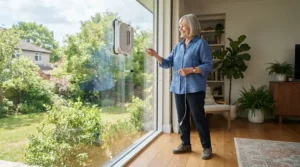
How to Choose a Window Cleaning Robot for Seniors Who Can’t Climb Ladders
Here’s a simple seven-step filter. It’s built for older users, not gadget collectors.
- Decide your control style first. If a phone feels like a hassle, prioritize models with a handheld remote or station panel, like the Hobot S7 Pro or Ecovacs Winbot W2 Pro Omni.
- Check your window type. Frameless glass needs edge-detection tech; framed-only machines like the Mamibot W120-T can fall off frameless panes.
- Confirm safety hardware. Look for a rope, carabiner and backup battery. These matter more than suction numbers.
- Think about power. Cordless stations such as the Ecovacs Winbot W2S Pro Omni reduce trip hazards.
- Measure the smallest window. Minimum size specs (30 by 40 cm versus 40 by 40 cm) decide if your bathroom pane works.
- Look for voice prompts. Spoken status updates reduce guesswork.
- Plan for placement. Remember someone must place the robot on the glass, so weigh weight and ease of lifting.
Notice that suction power sits low on the list. It matters, but a rope you’ll actually use beats an extra thousand pascals you’ll never notice.
Remote Control Window Cleaning Robot for Upper Floors: What You Need to Know
A remote control window cleaning robot for upper floors sounds like the perfect answer for second- and third-story glass, and for the interior side it genuinely is. But the exterior needs honest caveats.
The challenge isn’t the robot, it’s getting the robot onto the outside pane. Most models need to be positioned by hand, which can mean leaning out of an opened window. That’s a fall risk, so for exterior upper-floor glass, the safer path is usually a window that tilts or opens inward fully, or a helper who handles placement while the senior operates the remote from inside.
Once it’s on the glass, the remote or app steering does the heavy lifting. The Ecovacs Winbot W2 Pro Omni lets you steer in any direction from the app, and the Ecovacs Winbot W2S Pro Omni adds the cordless station so you’re not feeding power cords out an open sash. Always clip the rope to a solid anchor inside, not to a decorative fixture.
Rule of thumb: if placing the robot requires you to lean past the sill, don’t. Clean the inside yourself, and bring in a pro or a helper for the outside.
Automatic Window Cleaner for Elderly Homeowners: Who Benefits Most
An automatic window cleaner for elderly homeowners isn’t equally useful for everyone, so here’s who gets the most from one.
Homeowners with mobility limits benefit first. If balance, vertigo or arthritis makes ladders and stools unsafe, a robot replaces the riskiest part of the chore entirely.
Homeowners with large glass come next. Sliding doors, picture windows and sunroom panes are exhausting by hand, and a robot like the Hobot S7 Pro is designed with big panes in mind.
Caregivers and adult children are the quiet winners. A senior can run a remote while a helper handles placement, which keeps independence intact without leaning on strangers.
Who benefits less? People with heavily soiled, greasy or very small windows, and anyone who can’t lift a roughly 1.5-3 lb device. The CDC reminds us that falls are not an inevitable part of aging and can be reduced with smart home changes, and swapping a ladder for a robot is exactly that sort of change.
✨ Don’t Miss These Exclusive Deals!
🔍 Take your ladder-free cleaning routine to the next level with these carefully selected robots. Click on any highlighted product to check current pricing and availability. These tools will help you enjoy authentic, streak-free glass your family will love!
Ladder-Free Cleaning vs Ladders, Squeegees and Pro Services
Ladder-free cleaning is the whole premise here, but it’s worth seeing how it compares with the usual alternatives.
| Method | Fall Risk | Effort | Ongoing Cost | Best For |
|---|---|---|---|---|
| Ladder + squeegee | High | High | Very low | Able-bodied users only |
| Long-handled pole tool | Low-moderate | Moderate | Low | Ground-floor glass |
| Professional service | Very low for you | None | Recurring, adds up | Exterior upper floors |
| Window cleaning robot | Low (with rope and care) | Low | One-time purchase | Regular interior upkeep |
Reading the table, a robot beats ladders on safety and pros on long-term cost, but it doesn’t replace a professional for hard-to-reach exteriors. The sensible plan for many households is a robot for regular interior upkeep and an occasional pro visit for outside.
The safety gap is not trivial. A study of ladder falls in a hospital setting found that older people fell from lower heights yet suffered different and more severe injuries, with head injuries more common in the older groups. Lower height, worse outcome. That’s the quiet argument for ladder-free cleaning.
Remote Control Operation: Features That Actually Matter (And Those That Don’t)
Remote control operation sounds like one feature but is really four, and they matter differently.
Matters: a physical remote or station panel. If a phone is a barrier, this is your deciding factor. The Hobot S7 Pro, Hobot 2S and Mamibot W120-T use remotes, while the Ecovacs Winbot W2 Pro Omni station adds an on-device panel.
Matters: manual steering. The ability to drive the robot to a missed spot saves you from a ladder trip. The Ecovacs Winbot W1 Pro app offers it, and the Ecovacs Winbot W2S Pro Omni app lets you steer manually too.
Matters: voice prompts. They tell you what’s happening without a screen.
Doesn’t matter much: smart-home integrations, scheduling and “AI” labels. They’re pleasant extras, but a tired senior rarely needs a cleaning schedule for a machine that takes minutes to place.
Every model also needs supervision. TechRadar’s broader testing notes that window bots need human intervention rather than being left alone, so remote control operation is less about convenience and more about staying in charge from a safe spot.
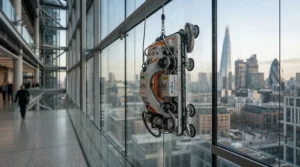
Fall Prevention at Home: Safety Guide for Window Robots
Fall prevention is the reason this whole category exists, so treat the robot’s safety kit as non-negotiable.
CDC data shows that about one in four older adults reports a fall each year, and falls are the leading cause of injury and injury-related death among older Americans. The agency’s STEADI initiative offers screening and prevention resources for older adults, caregivers and clinicians, and it’s a good place to start if balance is a concern.
Practical safeguards for robot use:
- Always attach the safety rope before the robot touches glass, and anchor it to something fixed.
- Keep walkways clear. A cordless station such as the Ecovacs Winbot W2S Pro Omni avoids cable clutter.
- Don’t run outside in rain or strong wind. CHOICE specifically flagged this for the Ecovacs Winbot W1 Pro.
- Never lean out to place or retrieve the device.
- Use a backup battery as a time buffer; models like the Hobot 2S and Mamibot W120-T offer about 20 minutes.
The point of fall prevention isn’t zero risk. It’s removing the biggest risk, which is you, standing on something unstable.
Practical Usage Guide: Setup, Maintenance and the First 30 Days
Here’s the playbook manufacturers’ listings rarely spell out.
Day one: dry run. Wipe the glass edges and frame, because dust at the edges is what confuses sensors. Charge any backup battery fully before the first run, and test the remote while the robot sits flat on a table.
First placement. Attach the rope and carabiner first. Press the robot flat onto the glass, then start it. If it’s on a framed window, check that the frame is flat enough for the edge sensor.
Cleaning fluid. Use only what the maker recommends; the Hobot 2S is paired with a detergent designed for its ultrasonic nozzles, though water works. Avoid greasy or very dirty glass on the first pass, since the Mamibot W120-T and similar units clog on heavy dust.
Maintenance schedule.
- After every run: rinse or replace the pad.
- Monthly: inspect the rope for fraying and test the backup battery.
- Quarterly: update firmware if the app offers it. The Hobot 2S app even sends a reminder around every three months.
Common first-month mistakes: skipping the rope, trusting the robot on wet glass, and running it on frameless panes with a framed-only unit.
Real-World Scenarios: Which Robot Fits Which Home
Concrete profiles beat abstract advice, so here are three.
Scenario 1: The retired couple in a two-story house. Budget is flexible, but ladders are out. Windows are a mix of framed and sliding doors. The Ecovacs Winbot W2 Pro Omni fits: station panel for no-phone use, strong rope, and broad window compatibility. They run it weekly on interior glass.
Scenario 2: The solo senior with a big patio door and a small budget. She dislikes apps and wants a remote. The Hobot S7 Pro works well for large panes, while the Mamibot W120-T is the cheaper alternative if all her windows are framed.
Scenario 3: The adult child managing a parent’s third-floor apartment. Outlets are scarce and cords are a trip hazard. The Ecovacs Winbot W2S Pro Omni with its cordless station is the match, and the child handles placement during visits while the parent operates the remote from a chair.
Notice the pattern: the best robot follows the person’s biggest obstacle, whether that’s phones, budget or power access.
Problem to Solution: Fixing the Most Common Complaints
Window robots aren’t magic. Here are the usual snags and what to do.
Problem: streaks or leftover patches. TechRadar’s testing notes that cleaning quality can vary. Solution: pre-wipe heavy dirt, use fresh pads and run a second pass on stubborn glass, as CHOICE found with the Ecovacs Winbot W1 Pro after a deep clean.
Problem: corners get missed. Solution: choose a square design with corner scrubbers like the Ecovacs Winbot W2S Pro Omni, or drive the Ecovacs Winbot W2 Pro Omni into corners manually.
Problem: the robot stops mid-glass. Solution: wipe the edge sensors, check battery level and confirm the frame is flat.
Problem: the app is confusing. Solution: pick a model with a remote or station panel, or ask a family member to set up the app once and rely on presets afterward.
Problem: you can’t safely place it. Solution: ask a helper or switch to interior-only use.
Long-Term Cost and Maintenance: Is It Worth the Money?
A robot costs more upfront than a squeegee, but less than repeated professional visits, which is where the value story gets interesting.
| Product | Price Range | Ongoing Costs | Best For |
|---|---|---|---|
| Ecovacs Winbot W2S Pro Omni | Around $500-$600 | Pads, occasional service | Cordless convenience |
| Ecovacs Winbot W2 Pro Omni | Around $400-$600 | Pads, occasional service | Overall value |
| Ecovacs Winbot W1 Pro | Roughly $200-$400 | Pads, backup battery | Entry-level buyers |
| Hobot S7 Pro | Mid-$400s | Pads, detergent | Large glass |
| Hobot 2S | Around $400-$550 | Pads, detergent | Voice guidance |
| Mamibot W120-T | Around $200-$300 | Pads | Tight budgets |
For cost-per-use, a mid-range unit cleaned monthly for several years easily undercuts quarterly pro visits, especially if the household has many windows. The cheaper Mamibot W120-T pays back fastest but trades away corners and frameless support, while the Ecovacs Winbot W2 Pro Omni costs more yet covers more window types.
Watch the hidden costs: replacement pads, eventual battery wear, and an optional protection plan. Ecovacs, for instance, offers optional coverage against rare suction failures on some models.

Frequently Asked Questions
❓ Can a window cleaning robot clean outside windows on upper floors?
❓ What happens to a window cleaning robot during a power outage?
❓ Do I need a smartphone to run an automatic window cleaner?
❓ Are window cleaning robots safe for frameless glass?
❓ How much does a window cleaning robot cost in 2026?
Conclusion
A window cleaning robot for seniors who can’t climb ladders won’t make you a window-washing wizard, but it can quietly remove the most dangerous step from the job. The research points to a clear pattern. The Ecovacs Winbot W2 Pro Omni is the best overall balance, the Ecovacs Winbot W2S Pro Omni suits upper-floor homes that need cordless freedom, and the Ecovacs Winbot W1 Pro is the gentlest on the wallet for smartphone users.
If you prefer a physical remote, the Hobot S7 Pro shines on big panes, the Hobot 2S adds voice guidance, and the Mamibot W120-T is the budget workhorse for framed windows. The MOVA N1 is an intriguing wildcard once more independent testing arrives.
One last reminder: robots are tools, not guarantees. Use the rope, clear the walkway, never lean out, and bring in a professional for the hard-to-reach exterior. Do that, and ladder-free cleaning becomes a genuine upgrade to independence.
Recommended for You
- Cordless Window Cleaning Robot for High-Rise Apartment: 7 Best (2026)
- Window Cleaning Robot for Solar Panels and Greenhouse Glass: 7 Best
- Window Cleaning Robot With Safety Rope for Skylights: 7 Best 2026
Disclaimer: This article contains affiliate links. As an Amazon Associate, I earn from qualifying purchases. If you purchase products through these links, we may earn a small commission at no additional cost to you.
✨ Found this helpful? Share it with your friends! 💬🤗
